
Watching which way mosquitoes move inside a transparent box: observations like these begin MOSLOCK's development story. Chamber behavior and blood-feeding counts in real-life spaces are different measures. Understanding that distinction helps you read test results more accurately.
What a chamber observation measures
The development chamber connects two compartments with a passage. Attractant conditions and an ultrasound generator are placed on one side, and mosquitoes on the other, to observe movement. The aim is to compare behavior with the device on and off.
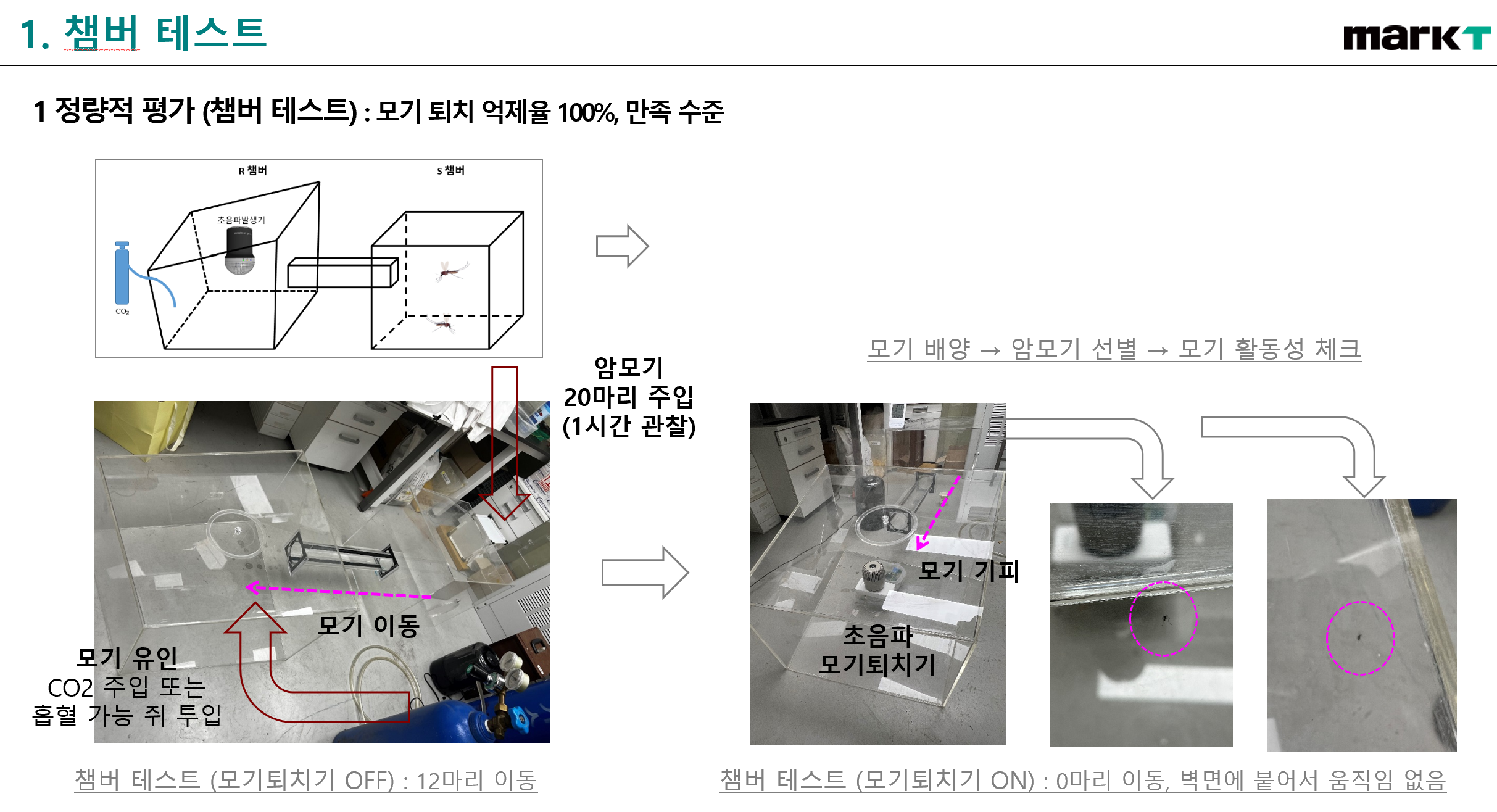
The records also show mosquito selection and activity checks. Comparing responses requires attention to observation time, mosquito condition and attractant conditions. A photograph or one percentage cannot explain the entire test.
Different spaces mean different conditions
Vehicles and docking tents have corners, reflective surfaces and obstructed areas. Tests in these spaces should be read separately from chamber observations. The supplied field materials record an SUV docking tent, the cabin, temperature and humidity checks, and mosquito preparation.
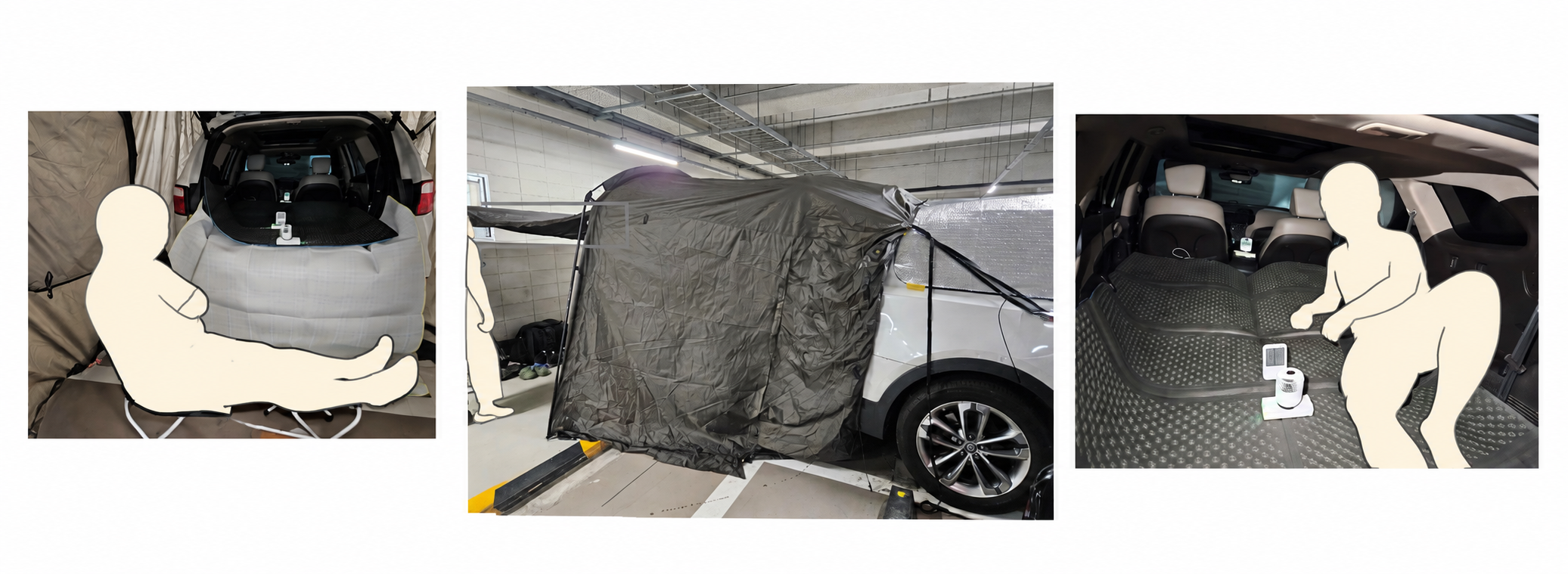
Comparison conditions matter more than a participant's appearance: the species and number of mosquitoes, the space, duration and measurement. Check these details before comparing device OFF and ON results.
Read the conditions alongside the numbers
| Setting · period | Measurement | Result under these conditions |
|---|---|---|
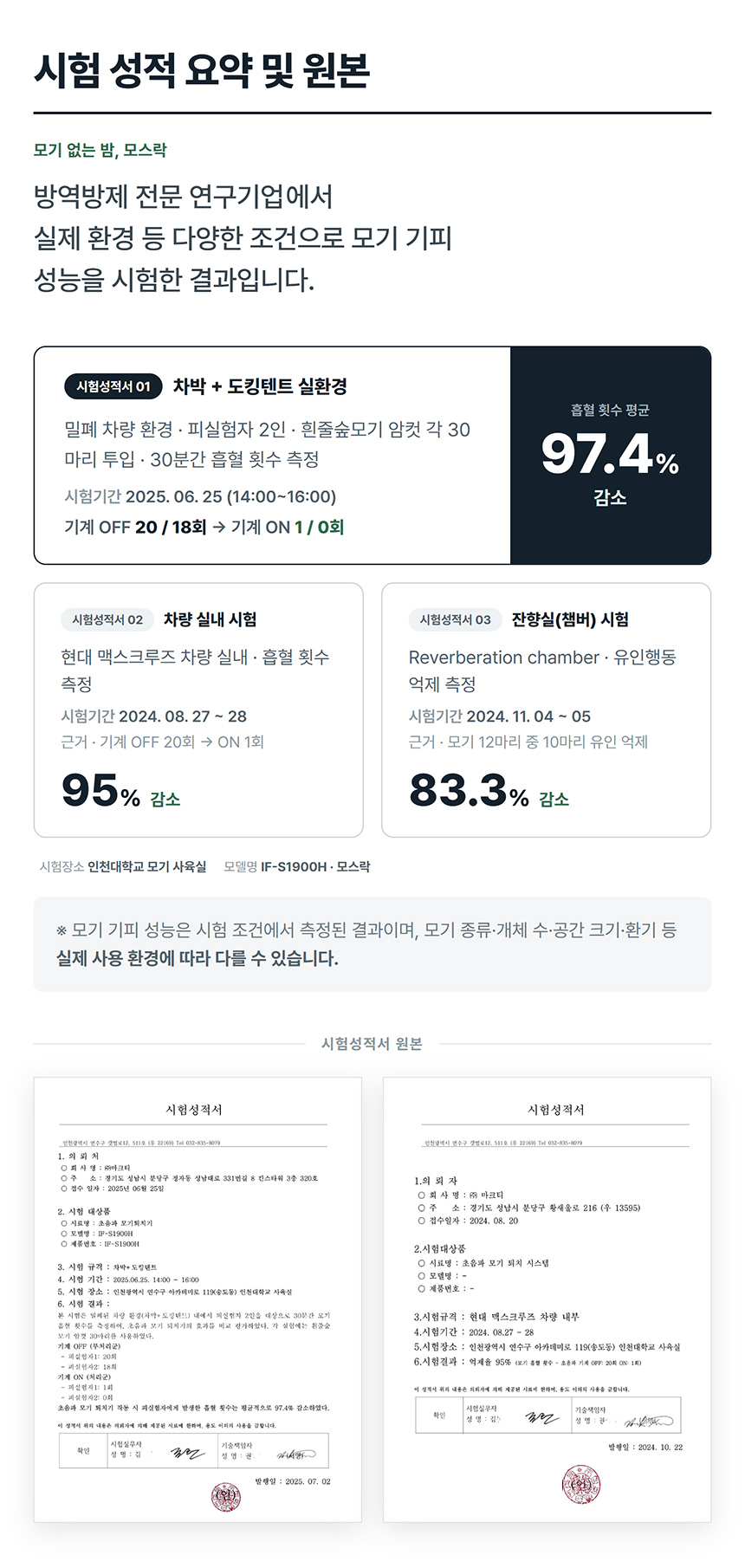
| SUV + docking-tent setting 2025.06.25 | Blood-feeding counts over 30 minutes OFF 20/18 → ON 1/0 | 97.4% average reduction |
| SUV cabin 2024.08.27–28 | Blood-feeding count comparison OFF 20 → ON 1 | 95% reduction |
| Reverberation chamber 2024.11.04–05 | Attraction suppressed in 10 of 12 mosquitoes | 83.3% suppression of attraction behavior |
Reduced blood-feeding counts and suppressed attraction behavior are distinct outcomes. Results were measured under the stated conditions; actual outcomes may vary by species, mosquito count, space, ventilation and other factors. Development chamber data and report results are not combined into one value.
For product design principles and published research evidence, continue to test results on the technology page.
Materials and sources
- Chamber development and car-camping/docking-tent test materials supplied by MARKT.
- MOSLOCK test summary and originals: see the images in this article.
- This editorial article organizes supplied materials for readability. No field dialogue or participant comments have been invented.